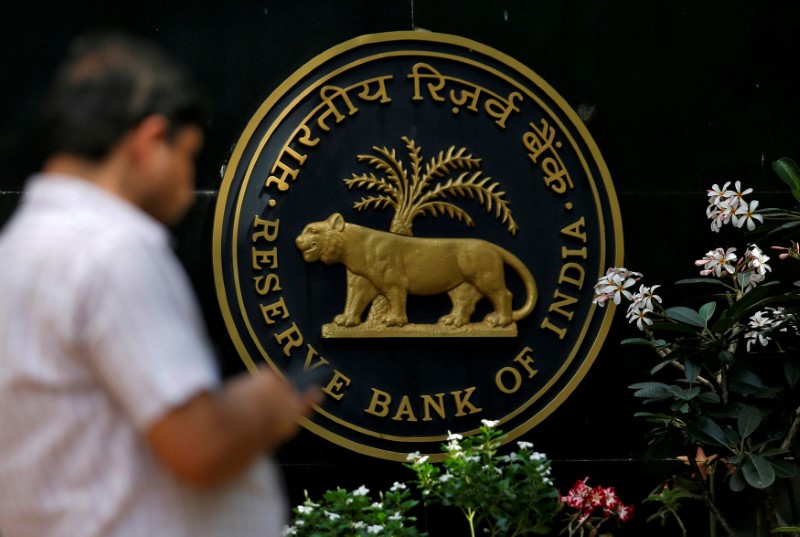
RBI keeps interest rates unchanged as economic growth cools By Investing.com
Investing.com– The Reserve Bank of India (NS:) kept interest rates unchanged as expected on Friday, maintaining a neutral stance as recent data showed the Indian economy was cooling after several quarters of stellar growth.
The central bank cut its economic growth outlook for the current financial year, while also hiking its inflation forecast.
The RBI kept its at 6.5% for a tenth consecutive meeting, in line with most market forecasts.
RBI Governor Shaktikanta Das said that Friday’s hold, as well as the bank’s neutral stance, was driven largely by a focus in the central bank on keeping inflation in check.
“Only with durable price stability can strong foundations be secured for high growth,” Das said in a livestream.
Friday’s move comes after from last week showed India’s economy grew at a much slower than expected pace in the September quarter, pressured by sluggish manufacturing and sticky inflation.
Das said GDP growth in the current fiscal year is expected at 6.6%, down from prior forecasts of 7.2%.
The weak GDP print saw a small group of investors positioning for a potential 25 basis point rate cut by the RBI, although the bank has so far given few signals that it plans to begin easing rates soon.
Das noted that the recent GDP reading was driven by a substantial deceleration in industrial growth, although this was limited to specific sectors such as oil and cement. But he noted that industrial activity is also expected to recover in the current quarter.
The RBI had flagged a shift towards neutral during its October meeting, after maintaining a restrictive stance since 2022. The central bank is expected to begin trimming rates in 2025, as long as inflation remains steadily on a downward trend.
Inflation data for shot past the RBI’s 6% upper target, amid sticky food prices. Das said inflation for fiscal 2025 was expected at 4.8%, above prior forecasts of 4.5% but still within the RBI’s 4% to 6% target range.
Das warned that food inflation pressures were likely to linger in the current quarter, and will start easing only in the next quarter.