Can you explain the importance of fiducial marks in Pcb rigid flex?
explain the importance of fiducial marks in Pcb rigid flex
Fiducial marks play a crucial role in PCB (Printed Circuit Board) rigid-flex assemblies, offering a reference point for precise alignment and registration throughout the manufacturing process. In the context of rigid-flex PCBs, which feature both rigid and flexible sections, fiducial marks are especially important due to the complex nature of the board architecture. These marks, typically consisting of small copper or non-functional pads with unique geometric shapes, serve as reference points for automated assembly equipment and ensure accurate placement of components and features on the board.
One of the primary reasons for the importance of fiducial marks in PCB rigid flex is their role in achieving proper alignment and registration during the assembly process. pcb rigid flex often undergo multiple manufacturing steps, including solder paste printing, component placement, and reflow soldering, each of which requires precise alignment to ensure optimal assembly quality. Fiducial marks provide visual reference points for automated vision systems and pick-and-place machines, enabling them to accurately position components relative to the board’s features and ensure proper alignment throughout the assembly process.
Moreover, fiducial marks help compensate for the inherent variability and tolerance stack-up in the manufacturing process, ensuring consistent and repeatable assembly results. By establishing a common reference frame for alignment and registration, fiducial marks allow assembly equipment to compensate for minor deviations in board positioning, component placement accuracy, or substrate warpage, thereby minimizing defects and improving manufacturing yield. This is particularly important in rigid-flex PCBs, where variations in material properties and thicknesses can affect assembly outcomes.
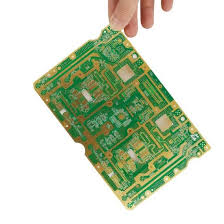
Can you explain the importance of fiducial marks in Pcb rigid flex?
Additionally, fiducial marks facilitate the accurate inspection and quality control of PCB rigid-flex assemblies by providing reference points for automated optical inspection (AOI) systems. AOI systems use fiducial marks to verify the correct placement and orientation of components, detect solder defects, and identify potential assembly issues such as misalignment or tombstoning. By enabling precise and reliable inspection, fiducial marks help ensure that assembled PCBs meet stringent quality standards and performance requirements.
Furthermore, fiducial marks serve as an essential tool for facilitating communication and collaboration between electronics designers, PCB manufacturers, and assembly partners. Designers use fiducial marks to convey critical information about board orientation, component placement, and assembly requirements to manufacturing partners, ensuring that assembly processes are performed according to design specifications. Similarly, manufacturers rely on fiducial marks to verify design intent, troubleshoot assembly issues, and optimize manufacturing processes for maximum efficiency and yield.
In conclusion, fiducial marks play a vital role in PCB rigid-flex assemblies by providing reference points for precise alignment, registration, inspection, and communication throughout the manufacturing process. By enabling accurate component placement, facilitating quality control, and supporting collaboration between stakeholders, fiducial marks contribute to the efficient and reliable production of rigid-flex PCBs. As the demand for flexible and miniaturized electronic devices continues to grow, the importance of fiducial marks in ensuring assembly accuracy and quality in PCB rigid flex will only increase.